(0)
Graphite Black Scalp Care Comb: What Defines a High-Quality Design?
As scalp care becomes a more established part of personal grooming, consumers are looking beyond traditional hair combs for tools that combine hair management with practical scalp-cleaning functions. A graphite black scalp care comb can meet this demand through a combination of distinctive product styling, functional tooth design, and convenient daily maintenance. However, developing a commercially competitive product requires more than choosing a dark finish. The real challenge is ensuring that its structure, contact performance, and material properties work together under repeated use.
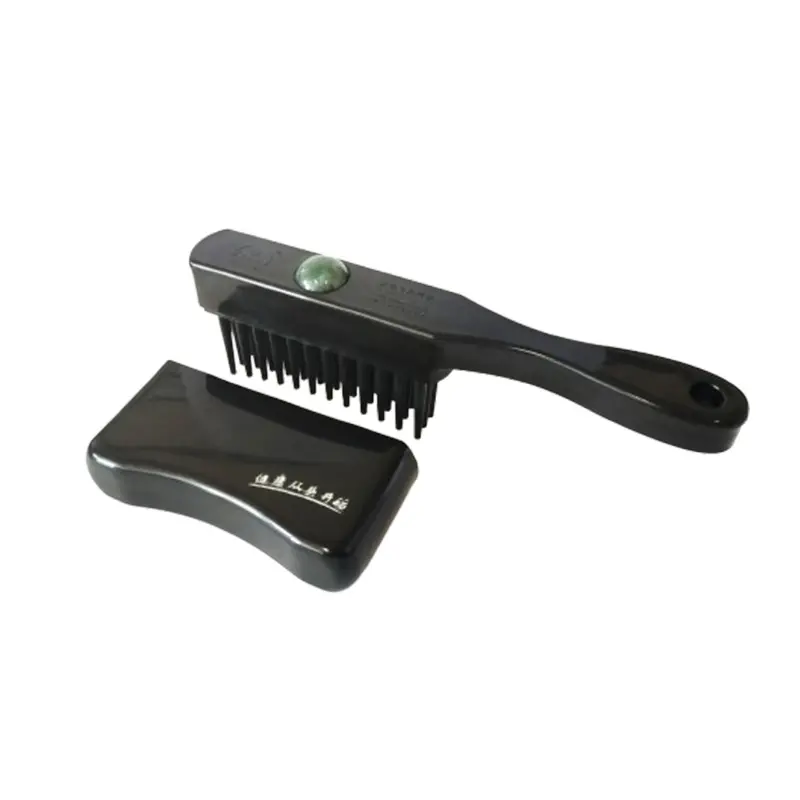
For personal care brands, product differentiation increasingly depends on details that consumers can experience directly: whether the comb moves smoothly through hair, whether its teeth feel comfortable against the scalp, whether it is easy to clean, and whether its appearance remains consistent after regular handling. These requirements should guide product design and manufacturing from the beginning.
Product Design: Balancing Appearance and Practical Function
Graphite black offers a contemporary alternative to standard black or transparent comb designs. Its dark gray-black appearance can create a more sophisticated visual identity, making it suitable for personal care collections positioned around modern grooming and wellness. Depending on the finishing process, manufacturers can develop a matte, satin, or slightly metallic surface effect.
The selected finish should correspond to the intended usage environment. A scalp care comb is frequently exposed to hand oils, water, shampoo, and other hair-care products. A finish that looks attractive under showroom lighting may show fingerprints, scratches, or discoloration after repeated use. Therefore, appearance evaluation should include routine handling and cleaning tests rather than relying exclusively on initial samples.
The overall shape also influences product usability. A well-balanced handle allows users to maintain control when combing through wet or dry hair, while appropriately distributed weight helps reduce hand fatigue during longer grooming sessions. Edges and transitions should be smoothly finished, particularly around areas that come into contact with the fingers and scalp.
Tooth Structure Determines the User Experience
The most important functional component of a scalp care comb is its tooth structure. Unlike a conventional styling comb designed mainly to separate strands, a scalp care comb may be intended to help loosen and remove loose dandruff flakes, excess surface oil, and residue during grooming.
Tooth spacing must account for different hair characteristics. Closely spaced teeth may provide more contact with the hair, but they can create excessive resistance when used on thick or dense hair. Wider spacing allows hair to pass through more easily and may reduce pulling. Tooth length and thickness also affect flexibility and contact pressure.
Tip geometry deserves particular attention. Rounded, smooth tips can help reduce the risk of scratching the scalp, while poorly finished tips or sharp molding edges may cause discomfort. The teeth should offer enough structural support to maintain their shape without being unnecessarily rigid. These properties should be evaluated through repeated-use tests with different hair textures and grooming conditions.
A practical design validation process should include dry-hair combing, wet-hair use where appropriate, repeated scalp contact, and cleaning after use. The objective is to identify whether the product maintains consistent handling performance without excessive pulling, tooth deformation, or uncomfortable contact.
Choosing Materials for Repeated Daily Use
Material selection affects structural durability, surface quality, weight, and production consistency. ABS and PP are two common polymer options for consumer grooming products, but their characteristics differ.
ABS generally offers good rigidity and can support detailed molded structures and refined surface finishes. It may be suitable when a solid feel and precise appearance are important. PP is lightweight and offers useful flexibility and resistance to many common chemicals. It may be considered when the design requires greater material flexibility or a lightweight structure.
Neither material is automatically superior for every scalp care comb. The decision should consider tooth dimensions, expected bending stress, handle design, manufacturing method, and contact with hair-care products. For example, a comb with relatively thin teeth requires sufficient flexibility and resistance to repeated bending, while a design with a rigid handle may prioritize dimensional stability.
The graphite black appearance must also be considered during material development. If the color is incorporated into the raw material, manufacturers should evaluate pigment dispersion and color uniformity. If a surface coating is applied, coating adhesion, abrasion resistance, and compatibility with cleaning agents become important inspection points. The final specification should clearly identify the material and finishing method instead of treating graphite black as a complete technical description.
Scalp Cleaning and Product Positioning
A scalp care comb can support everyday grooming by helping remove loose flakes and surface residue accumulated between washing sessions. Its effectiveness depends on tooth geometry, usage technique, hair condition, and the nature of the material being removed. It should be positioned as a personal care accessory rather than a medical device.
This distinction is important for product descriptions and overseas marketing. Claims such as treating dandruff, preventing hair loss, or improving scalp diseases require appropriate scientific evidence and may trigger additional regulatory requirements depending on the market. More defensible descriptions focus on helping remove loose flakes and excess surface oil during routine grooming, while supporting a clean and comfortable scalp-care experience.
Cleaning convenience is another factor that directly affects product satisfaction. Hair and residue can collect between comb teeth, particularly when the product is used frequently. Smooth surfaces, accessible tooth spacing, and minimal dirt-trapping recesses make maintenance easier. Manufacturers should provide suitable cleaning instructions and confirm that the selected material and finish can withstand the recommended cleaning process.
Manufacturing Quality and Inspection Requirements
A scalp care comb may appear structurally simple, but small manufacturing defects can significantly affect its usability. Tooth alignment, tip smoothness, molding flash, surface scratches, and dimensional variation should all be included in quality inspection.
Dimensional checks help confirm that tooth spacing, length, and handle geometry remain consistent across production batches. Visual inspection can identify color differences, sink marks, flow marks, and surface defects. Functional tests should examine tooth flexibility, resistance to breakage, and structural stability under repeated use.
For products with a coated graphite black finish, manufacturers should additionally evaluate coating adhesion and resistance to abrasion. For molded-in-color products, pigment distribution and batch-to-batch color consistency should be monitored. Packaging also deserves attention because friction between products during transportation can create visible surface damage.
Before mass production, sample approval should cover both appearance and functional performance. A documented specification that defines material, finish, dimensions, tooth configuration, acceptable defects, and inspection methods can reduce inconsistencies between product development and manufacturing.
Building a Functional Grooming Product with Jiuxianggu
Shanghai Jiuxianggu Health Technology Co., Ltd. focuses on the research and design of healthy lifestyle products, covering categories such as daily necessities and food. Its Fun Health Comb is developed as a functional comb intended to help remove excess oil and loose dandruff from the scalp while providing a cleaning-oriented grooming experience.
For a graphite black scalp care comb, this product concept can be translated into several practical design priorities: comfortable tooth contact, effective hair separation, convenient residue removal, durable material performance, and a consistent surface finish. These factors should be validated together because improving one feature without considering the others may compromise the overall user experience.
A commercially successful scalp care comb is defined by how well it performs throughout its service life, not simply by its appearance when first purchased. Combining appropriate material selection, carefully engineered tooth geometry, controlled manufacturing quality, and realistic performance testing provides a stronger foundation for developing a graphite black scalp care comb that meets the expectations of modern personal care markets.