(0)
Graphite Black Scalp Care Comb: Design, Function, and Daily Scalp Care
A graphite black scalp care comb combines practical hair grooming with scalp-focused care, offering a convenient tool for users who want to manage excess oil, remove loose dandruff, and maintain a cleaner scalp during their daily hair care routine. Unlike conventional combs designed primarily for detangling and styling, a scalp care comb places greater emphasis on tooth structure, contact comfort, cleaning performance, and ease of maintenance.
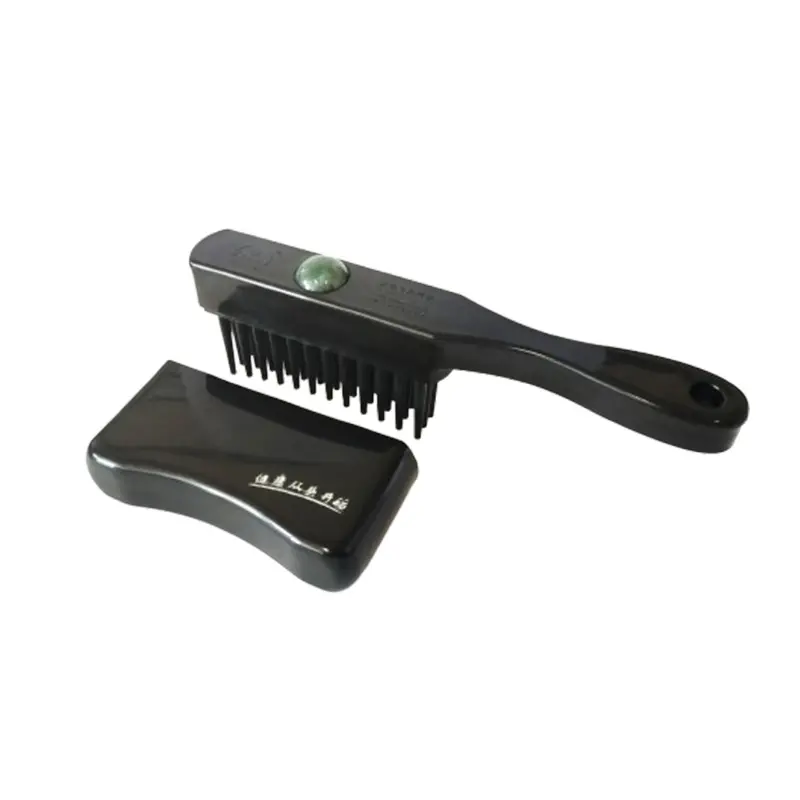
For manufacturers developing functional personal care products, the challenge is to balance these requirements without compromising usability. Tooth geometry, material selection, surface finishing, structural durability, and ergonomic design all influence how the comb performs in everyday use. A well-designed graphite black scalp care comb should provide consistent contact with the scalp, distribute pressure comfortably, and remain easy to clean after repeated use.
What Makes a Scalp Care Comb Different?
A conventional hair comb mainly separates hair strands and helps remove tangles. A scalp care comb is designed with additional attention to the interaction between its teeth and the scalp surface.
During use, the comb teeth pass through the hair and make controlled contact with the scalp. This mechanical action can help loosen accumulated oil, dead skin cells, and loose dandruff, making them easier to remove during subsequent washing or routine cleaning.
However, scalp care performance depends heavily on the tooth design. Teeth that are too sharp or rigid may cause discomfort, while teeth that are excessively soft or widely spaced may provide insufficient contact. The ideal configuration depends on the intended user group, hair density, scalp sensitivity, and whether the product is designed for wet or dry use.
A functional scalp care comb should therefore be evaluated as a personal care tool rather than simply as a decorative hair accessory.
Why Choose a Graphite Black Finish?
Graphite black offers a restrained, contemporary appearance that fits premium grooming and personal care product positioning. Compared with bright or highly reflective finishes, a graphite black surface can create a more understated visual identity and coordinate with different bathroom and grooming environments.
From a manufacturing perspective, the finish should remain consistent across production batches. Differences in color tone, surface texture, gloss level, or coating uniformity can affect the perceived quality of the finished product.
The exact finishing method will depend on the comb's base material. If the product uses molded plastic, color may be integrated into the resin or achieved through an additional surface treatment. If a coating is applied, adhesion, scratch resistance, and resistance to common personal care products should be evaluated.
Color consistency should be assessed using approved physical samples under standardized lighting. This is particularly important for brands ordering large quantities or maintaining a consistent product appearance across multiple product lines.
Tooth Geometry and Scalp Contact
The tooth structure is one of the most important functional elements of a graphite black scalp care comb. Tooth length, spacing, tip radius, flexibility, and arrangement determine how the comb interacts with different hair types and scalp conditions.
Rounded tooth tips help reduce the risk of uncomfortable point contact. Smooth surfaces and properly finished edges are also important because burrs or molding irregularities can create friction and irritation.
Tooth spacing influences how the comb moves through hair. Wider spacing may be more suitable for thicker or longer hair because it can reduce pulling and tangling. Closer spacing may provide more contact points, but it can also increase resistance when passing through dense hair.
Flexibility requires similar consideration. A rigid tooth structure may provide more consistent mechanical contact, while a more flexible design can adapt better to different scalp contours. Excessive flexibility, however, may reduce control and make the comb feel less stable.
Product development should include repeated-use testing with different hair densities and lengths. This helps identify problems such as hair pulling, excessive resistance, uneven scalp contact, or uncomfortable pressure.
Material Selection and Structural Durability
The base material affects the comb's strength, weight, flexibility, surface quality, and long-term durability. For molded personal care products, material selection should consider mechanical performance as well as compatibility with repeated contact with water, shampoo, conditioners, and cleaning agents.
A suitable material should maintain its shape during normal use and resist cracking or deformation under reasonable handling loads. Tooth roots and connecting structures deserve particular attention because these areas may experience repeated bending forces.
Manufacturing quality also depends on dimensional consistency. Variations in tooth thickness, spacing, or overall geometry can affect the product's feel and performance. Injection molding parameters, mold condition, cooling behavior, and post-processing controls should be managed to maintain repeatability.
For products intended for wet environments, water exposure and cleaning compatibility should be included in product validation. The specific resistance characteristics should be confirmed according to the actual material and surface treatment rather than assumed from appearance alone.
Supporting Oil and Dandruff Removal
Excess sebum, loose skin flakes, and styling product residue can accumulate on the scalp and hair. A scalp care comb can provide mechanical assistance by helping loosen surface debris during grooming.
Its role should be clearly distinguished from that of a shampoo or scalp treatment. The comb does not replace cleansing products or medical treatment for persistent dandruff and scalp disorders. Instead, it can complement a regular hair care routine by helping remove loose material and making subsequent washing more convenient.
The cleaning performance depends on tooth spacing, contact geometry, and how easily the comb moves through hair without excessive pulling. A design that allows users to reach the scalp while maintaining comfortable contact is generally more practical than one that focuses only on dense tooth arrangements.
Manufacturers should evaluate the product through user trials, examining ease of handling, scalp comfort, cleaning convenience, and performance after repeated use.
Ergonomic Design and Cleaning Convenience
A scalp care comb is often used with one hand, sometimes in wet conditions. Handle shape, grip texture, weight distribution, and overall dimensions therefore influence usability.
An ergonomic handle should provide sufficient control without requiring excessive gripping force. Rounded body edges and balanced weight distribution can improve handling during longer grooming sessions.
Cleaning is another important design consideration. Hair, oil, and loose skin particles may accumulate between the teeth after use. A comb with accessible tooth spacing and smooth structural transitions is easier to rinse and maintain. Complex recesses or narrow gaps can make residue removal more difficult.
If the product is intended for use in the shower, manufacturers should also assess water drainage and the potential for residue accumulation in the body structure.
Quality Control for Graphite Black Scalp Care Combs
A consistent manufacturing process should include dimensional inspection, visual appearance checks, tooth integrity evaluation, and functional testing.
Visual inspection should identify color variation, scratches, molding marks, burrs, and surface contamination. Dimensional checks should focus on tooth spacing, tooth height, tip geometry, and overall product dimensions. Functional tests should evaluate tooth flexibility, resistance to breakage, and handling comfort.
For graphite black products, surface inspection is particularly important because certain scratches, dust marks, and uneven finishes may be more noticeable under direct lighting.
Packaging should also protect the comb from surface abrasion during storage and transportation. Individual protective bags, suitable inserts, and appropriate carton arrangements can help preserve the finished appearance before retail distribution.
Developing Functional Scalp Care Products with Fun Health Comb
Shanghai Jiuxianggu Health Technology Co., Ltd. focuses on the research and design of healthy lifestyle products across personal care, daily necessities, and related product categories. Its Fun Health Comb concept emphasizes functional hair and scalp grooming, including the removal of excess oil and loose dandruff through mechanical contact.
For a graphite black scalp care comb, successful product development requires a coordinated approach to appearance, tooth structure, material performance, ergonomics, and quality consistency. These factors determine whether the product can deliver a comfortable daily grooming experience while maintaining reliable manufacturing quality.
Ultimately, a graphite black scalp care comb should be judged by more than its color or appearance. Its value comes from the balance between effective scalp contact, comfortable operation, durable construction, easy cleaning, and consistent production quality.