(0)
Fun Health Care Comb: How Functional Design Supports Scalp Care and Daily Hair Hygiene
A comb is more than a tool for detangling hair. For consumers who pay attention to scalp cleanliness, excess oil, visible flakes, and daily hair-care habits, a well-designed comb can become part of a more consistent personal-care routine. A Fun health care comb combines the familiar function of a conventional comb with features intended to support scalp grooming and cleaning, creating opportunities for differentiation in the personal-care market. Its value depends not simply on appearance or novelty, but on how effectively its structure, materials, tooth design, and cleaning method work together during everyday use.
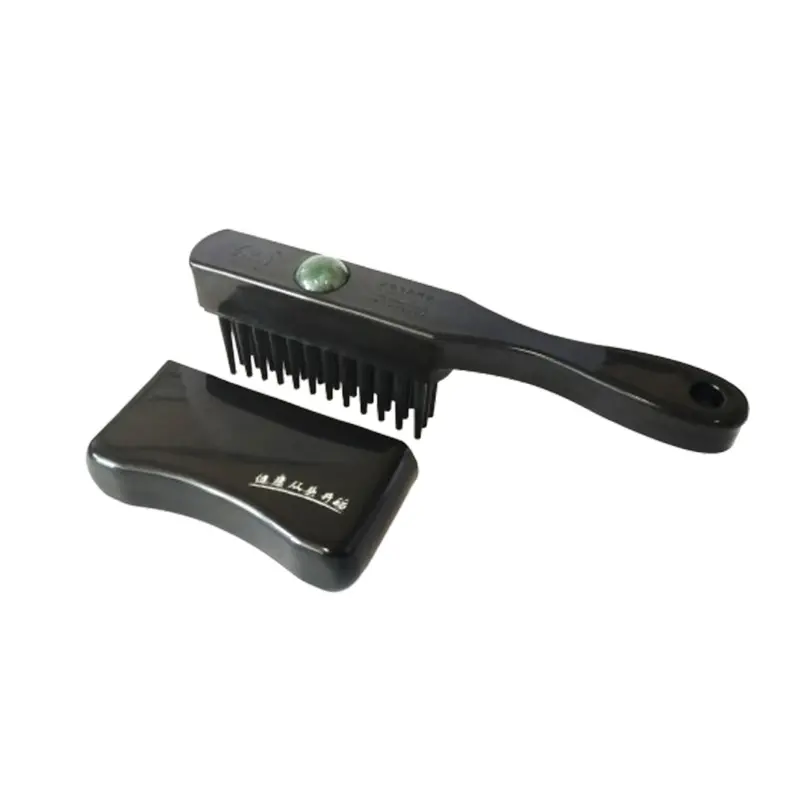
For a functional comb, product development must balance several practical requirements: comfortable contact with the scalp, effective movement through different hair types, easy removal of accumulated residue, durable construction, and straightforward maintenance. These factors influence consumer experience as well as product consistency during manufacturing. For brands developing health-oriented personal-care products, understanding these design considerations is essential to turning a concept into a reliable product that consumers can use regularly.
Shanghai Jiuxianggu Health Technology Co., Ltd. focuses on the research and design of healthy lifestyle products across areas including daily necessities and food. Within this broader product direction, the Fun health care comb offers a way to combine routine grooming with scalp-care-oriented functionality. Its development should be evaluated through the interaction of mechanical design, hygiene, usability, and clearly defined product claims.
What Makes a Fun Health Care Comb Different from a Conventional Comb?
A conventional comb primarily separates hair strands, helps manage tangles, and supports styling. A functional health-care-oriented comb may incorporate additional design features intended to help remove loose flakes, distribute or clear excess surface oil, or make routine scalp grooming more convenient. The distinction lies in the design objective: the product is developed not only to manage hair but also to address specific aspects of the user's grooming routine.
However, the term “health care” should not be interpreted as proof of a medical effect. A comb can mechanically contact the scalp and help remove loose debris, but this does not automatically mean that it treats dandruff, prevents hair loss, or corrects the underlying causes of scalp conditions. Dandruff can be associated with several factors, including skin sensitivity and the activity of naturally occurring microorganisms, while hair loss may result from genetics, hormonal changes, nutritional factors, medication, or other medical conditions. A grooming tool should therefore be positioned according to its demonstrated capabilities.
The most useful product distinction comes from features that can be evaluated directly. These may include the shape and spacing of the teeth, the flexibility of contact elements, the ease of removing collected residue, the grip design, and the suitability of the comb for different hair textures. If a product includes a specialized cleaning or residue-collection mechanism, its effectiveness should be assessed through repeatable use tests rather than inferred from its appearance.
For product development, a clear functional definition is the starting point. The design team should identify whether the main objective is detangling, scalp massage, removal of loose flakes, management of surface residue, or a combination of these functions. This decision guides the structure, material selection, validation method, and instructions provided to users.
Tooth Geometry and Scalp Contact: The Foundation of Usability
Tooth geometry is one of the most important design variables in a functional comb. Tooth length, spacing, tip shape, thickness, and flexibility determine how the comb interacts with hair and the scalp. A configuration that works well for short, straight hair may perform differently on long, dense, curly, or easily tangled hair.
Closely spaced teeth can improve control over fine strands and may help collect loose particles, but they can also increase resistance when passing through dense or tangled hair. Wider spacing generally allows more room for hair to move between teeth and can reduce snagging, although the ability to gather fine debris may differ. The optimal arrangement depends on the intended use rather than on a universal rule that closer or wider spacing is always better.
The shape of each tooth tip is equally significant. Sharp edges, molding flash, or rough surfaces can cause discomfort and may scratch sensitive skin. Rounded tips and carefully finished surfaces can help reduce localized pressure, but the actual experience also depends on tooth stiffness, the force applied by the user, and the angle of contact. A comb intended for repeated scalp contact should therefore undergo both dimensional inspection and practical comfort evaluation.
Flexibility requires similar attention. Excessively rigid teeth may create concentrated pressure, especially when users apply force to reach the scalp through thick hair. Teeth that are too flexible may bend away from the intended path, reducing control or making the cleaning action inconsistent. Material stiffness and tooth geometry should be evaluated together because changing one can alter the performance of the entire comb.
A useful validation process includes testing on representative hair types, checking whether the teeth snag or pull strands, and assessing comfort under normal use conditions. These evaluations can reveal design problems that may not be obvious from dimensional drawings alone.
Material Selection for Durability, Comfort, and Hygiene
Material selection affects the comb's surface finish, stiffness, wear resistance, cleaning requirements, and manufacturing consistency. Common personal-care comb materials include polypropylene (PP), ABS, and other engineered plastics, while some designs may use elastomeric components to provide more flexible contact or improved grip. The appropriate choice depends on the product structure and the required performance.
PP is often considered for lightweight molded personal-care products because it can support practical mass production and offers useful chemical resistance. ABS may be suitable where a more rigid structure and a particular surface finish are important. Flexible elastomers can provide softer contact in selected designs, although their compatibility with the main structure, cleaning agents, and manufacturing process must be confirmed. These materials are examples of possible design options, not a statement that any specific Fun health care comb uses them.
The material should also be assessed for repeated handling and cleaning. A comb may be exposed to sebum, shampoo, conditioner, water, and personal-care products. If residue can accumulate between teeth or inside a specialized collection mechanism, the product should be designed so that the affected areas can be accessed and cleaned without excessive effort.
Surface quality is particularly important in products that contact both hair and skin. Uneven edges, burrs, sink marks near functional areas, or poorly finished joints can influence comfort and cleaning performance. For molded components, process control should address material consistency, molding conditions, dimensional stability, and the removal of excess material. If the product contains multiple components, assembly accuracy and joint integrity should also be checked.
Any claim that a material is antibacterial, hypoallergenic, or otherwise beneficial to scalp health requires appropriate evidence. Ordinary material selection and a smooth surface do not independently establish those properties. Clear specifications and suitable testing help ensure that the product's actual performance matches its intended positioning.
Can a Fun Health Care Comb Help Remove Oil and Dandruff?
The answer depends on what is meant by “remove.” During normal grooming, a comb can help dislodge loose flakes and move surface residue away from the scalp. Its teeth may also help distribute hair-care products or separate hair to make the scalp easier to reach during washing. These are mechanical grooming functions, and their effectiveness depends on the comb's design and how it is used.
Excess oil presents a more complex challenge. Sebum is produced naturally by sebaceous glands, and a comb does not stop that production. Depending on tooth spacing and surface design, combing may redistribute some oil along the hair shaft or collect a portion of surface residue. It should not be assumed to remove all oil or regulate scalp oil production. For consumers with an oily scalp, the comb is best understood as a complementary grooming tool rather than a replacement for appropriate cleansing.
Dandruff also requires careful positioning. A comb may help remove loose, visible flakes, but it does not necessarily address the underlying cause of dandruff or prevent recurrence. Aggressive scraping can irritate the scalp, potentially making discomfort worse. A well-designed functional comb should allow controlled contact and should not encourage users to apply excessive pressure in pursuit of a deeper cleaning effect.
Hair loss claims require even greater caution. Gentle grooming can help manage tangles and reduce unnecessary pulling when the comb is used appropriately, but that is not equivalent to treating hair loss or stimulating new hair growth. Product communications should distinguish observable grooming benefits from medical outcomes. If a scalp condition is persistent, severe, or accompanied by unusual hair loss, professional medical advice may be appropriate.
For manufacturers, these distinctions are commercially important. Claims such as “helps remove loose flakes during grooming” are more specific and easier to evaluate than broad promises to cure dandruff or prevent hair loss. The final claims should be supported by product testing and comply with the regulatory requirements of the intended sales market.
Manufacturing Quality Control: From Design Drawings to Finished Products
A functional comb must perform consistently across production batches. Small variations in tooth spacing, tip finish, component alignment, or material stiffness can affect how the product feels and works. Quality control should therefore connect design requirements with measurable production checks.
Dimensional inspection can verify overall length, width, tooth spacing, tooth height, and critical assembly dimensions. For designs with a specialized residue-removal feature, the relevant opening dimensions, moving parts, or contact surfaces should also be checked. The inspection plan should focus on characteristics that influence performance instead of relying only on overall appearance.
Visual inspection should cover flash, burrs, cracks, contamination, discoloration, incomplete molding, and other surface defects. Particular attention should be given to the tooth tips and areas that contact the scalp. A product can meet its general dimensional requirements and still be unsuitable for use if a small burr creates an uncomfortable contact point.
Functional testing should simulate the intended application. Depending on the design, this may include repeated combing, snagging checks, evaluation of contact comfort, cleaning trials, and assessment of any integrated collection or release mechanism. If the comb is intended to be washed repeatedly, testing should also examine whether cleaning affects the material, surface finish, component fit, or mechanical function.
Packaging and storage deserve attention as well. Finished combs should be protected from dust, contamination, and damage during handling and transportation. If the product is marketed as a personal-care item, packaging should communicate the intended use, cleaning instructions, and any limitations clearly. Consistent labeling can reduce misuse and support a more reliable user experience.
Designing for Easy Cleaning and Long-Term Use
A health-oriented comb must be practical to maintain. Hair, skin flakes, and oily residue can collect around the teeth and in narrow gaps. If the product is difficult to clean, residue may remain after use and reduce the convenience of repeated grooming.
Designers should assess whether users can remove trapped hair without damaging the teeth and whether water can reach the areas that require cleaning. Deep recesses, narrow channels, and complex assemblies can make cleaning difficult, particularly if the product contains a built-in collection feature. A simpler structure may be preferable when it delivers the required function with fewer maintenance steps.
Cleaning instructions should match the materials and actual product construction. The manufacturer should not recommend hot water, strong solvents, or disinfectants unless compatibility has been evaluated. Likewise, a comb should not be described as sterilizable or suitable for a particular cleaning process without supporting evidence.
Durability testing can examine whether repeated use causes teeth to deform, loosen, crack, or develop rough surfaces. The relevant test conditions should reflect the product's intended life cycle and foreseeable handling. For a multi-component design, testing should include the interfaces between parts, since wear or loosening at these points can affect both performance and hygiene.
Conclusion
A successful Fun health care comb needs more than a distinctive appearance or a broad health-oriented message. Its practical value comes from the interaction of tooth geometry, scalp-contact comfort, material properties, cleaning convenience, manufacturing consistency, and clearly defined functional claims. These elements determine whether the comb can support everyday grooming without creating unnecessary pulling, discomfort, or maintenance difficulties.
For Shanghai Jiuxianggu Health Technology Co., Ltd., the Fun health care comb fits within a broader focus on healthy lifestyle products and functional daily necessities. By emphasizing measurable design requirements, representative-use testing, and responsible product communication, the company can develop a product proposition grounded in real user needs. The strongest differentiation is not an unsupported promise of medical results, but a well-engineered grooming tool that makes routine scalp care more convenient, comfortable, and consistent.